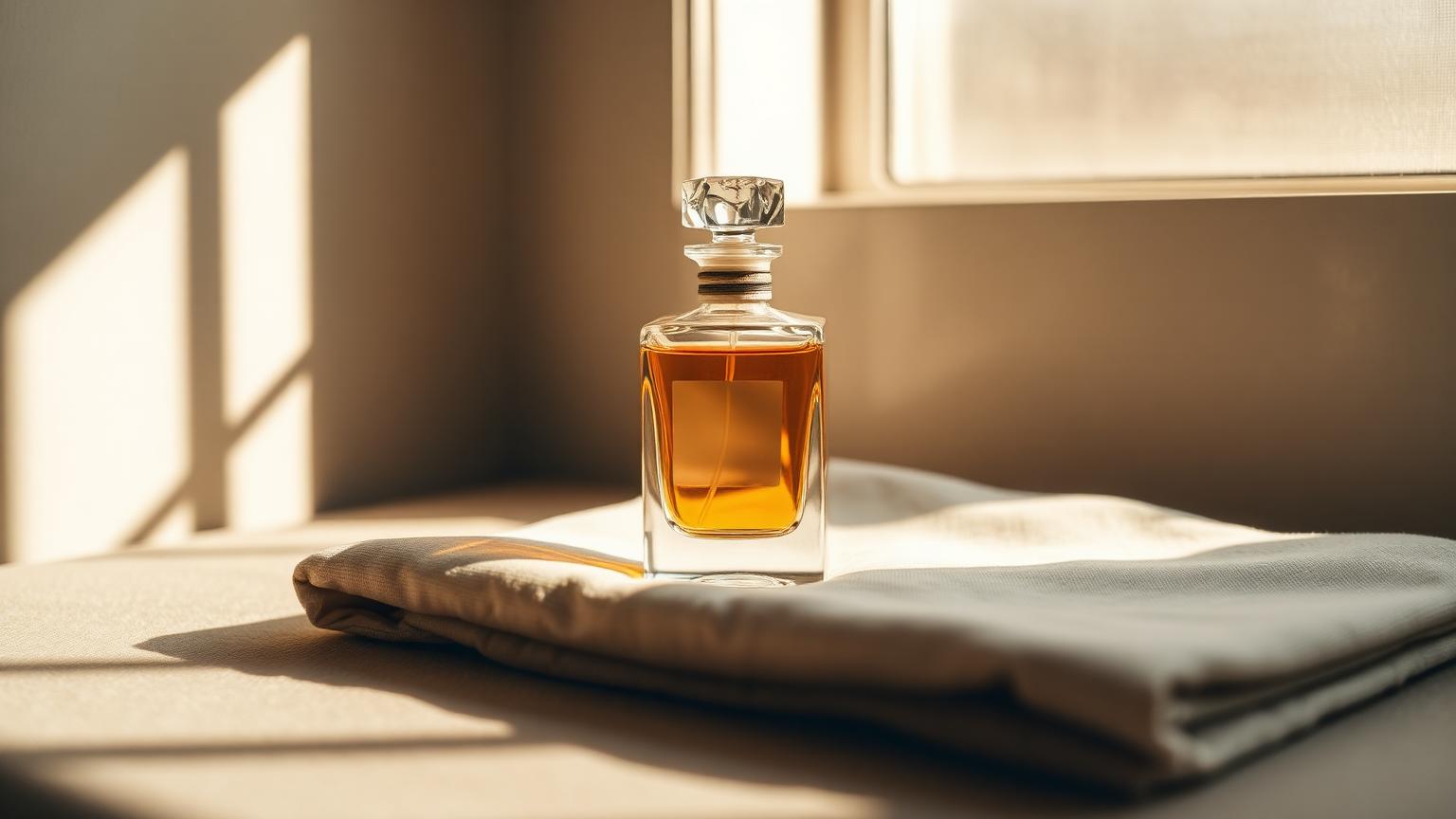
A signature scent is rarely the perfume you fall for on a first encounter. It is the one that, after months of wearing it, still feels exactly like the version of yourself you most want to inhabit. The work of choosing one is less about discovery and more about decision — a slow narrowing of possibilities until only one fragrance remains, and that fragrance becomes shorthand for you.
Most people approach the task in the wrong direction. They begin by sampling widely, chasing whatever felt magical on the blotter in the shop, and end up with a drawer of half-empty bottles and no anchor. A signature is built by elimination, not accumulation. The question is never which fragrance you can love for an afternoon. It is which fragrance you can live inside, quietly, for years.
Begin with identity, not with notes
Most fragrance writing begins with notes — iris, oud, neroli, vetiver — as though a scent could be assembled like a recipe. In practice, notes are the wrong starting point. They tell you nothing about the impression the finished composition will leave in a room. Start instead with the way you wish to be remembered after you leave one.
Try naming the impression in three or four words before you smell anything at all. Quiet and elegant. Magnetic and intimate. Confident, but never declarative. Warm, considered, slightly unknowable. Once the impression is named, the families of fragrance that can produce it narrow almost on their own — and the ones that cannot fall away.
A person who wants to read as quietly polished should not be sampling sweet gourmands, no matter how charming a particular one happens to be. A person who wants to feel magnetic at close range should not be choosing a transparent citrus cologne. Identity comes first; the bottle is what you reach for once the identity is clear.
“Identity comes first; the bottle is what you reach for once the identity is clear.”

Test three, not thirty
Once a direction is set, narrow to three finalists. Three is the right number. Two leaves no room for comparison; five or more dilutes attention until none of the contenders are wearing well in your mind. The goal is not breadth — the goal is decision.
Wear each finalist for at least three full days, morning to evening, before moving to the next. The first hour of any fragrance is rarely its truth. Top notes flatter and then leave; the composition you actually live inside is the heart and the dry-down, which take two to six hours to fully appear on warm skin. A fragrance that delights at first spray and then turns dull or generic by hour four is not a signature; it is an opening line.
Wear each finalist in the rooms and around the people the fragrance will actually inhabit. Test it in a meeting. Test it on a quiet evening at home. Test it on the third day, when you no longer notice it on yourself but those near you do. What other people say at hour eight matters more than what the blotter said at minute one.
Read your own skin
A fragrance does not smell the same on every wearer. Skin chemistry — temperature, oil, pH, even diet — amplifies some materials and mutes others. A sweet amber can read as luminous and golden on dry skin and turn syrupy on oilier skin. An iris can feel cool and powdery on one wrist and faintly metallic on another.
This is why blotters lie. A scent strip will tell you what the perfumer composed; only your wrist will tell you what you will wear. Sample on skin, always, and ideally on the same arm across consecutive days so the comparison is honest. If a fragrance behaves beautifully on the strip and disappears on your skin within an hour, it is not your fragrance — no matter how much you admire the composition in the abstract.
The decision is a commitment
A signature scent earns its place by being worn — quietly, consistently, over years. Choose with the kind of care you would bring to a piece of fine jewellery, and then commit. The discipline is not in the choosing; it is in the not-rechoosing every season.
There will be moments when a friend recommends something new, or a perfumer releases a launch that catches you, and the temptation will be to swap. Resist it for at least the first year of your signature. Buy a small decant of the new fragrance if you must, wear it on a holiday, then return to the bottle on your shelf. A signature only becomes one when other people begin to associate it with you — and that association takes time you cannot rush.
When you have worn the same fragrance for a year and still reach for it without thinking, the decision has held. That is the quiet proof that the choice was right. From here on, the only thing left to do is keep wearing it, and to let the rest of the wardrobe — the daily, the evening, the seasonal piece — arrange itself around the anchor you now have.
“A signature only becomes one when other people begin to associate it with you.”
Continue reading
Niche vs Designer Fragrance