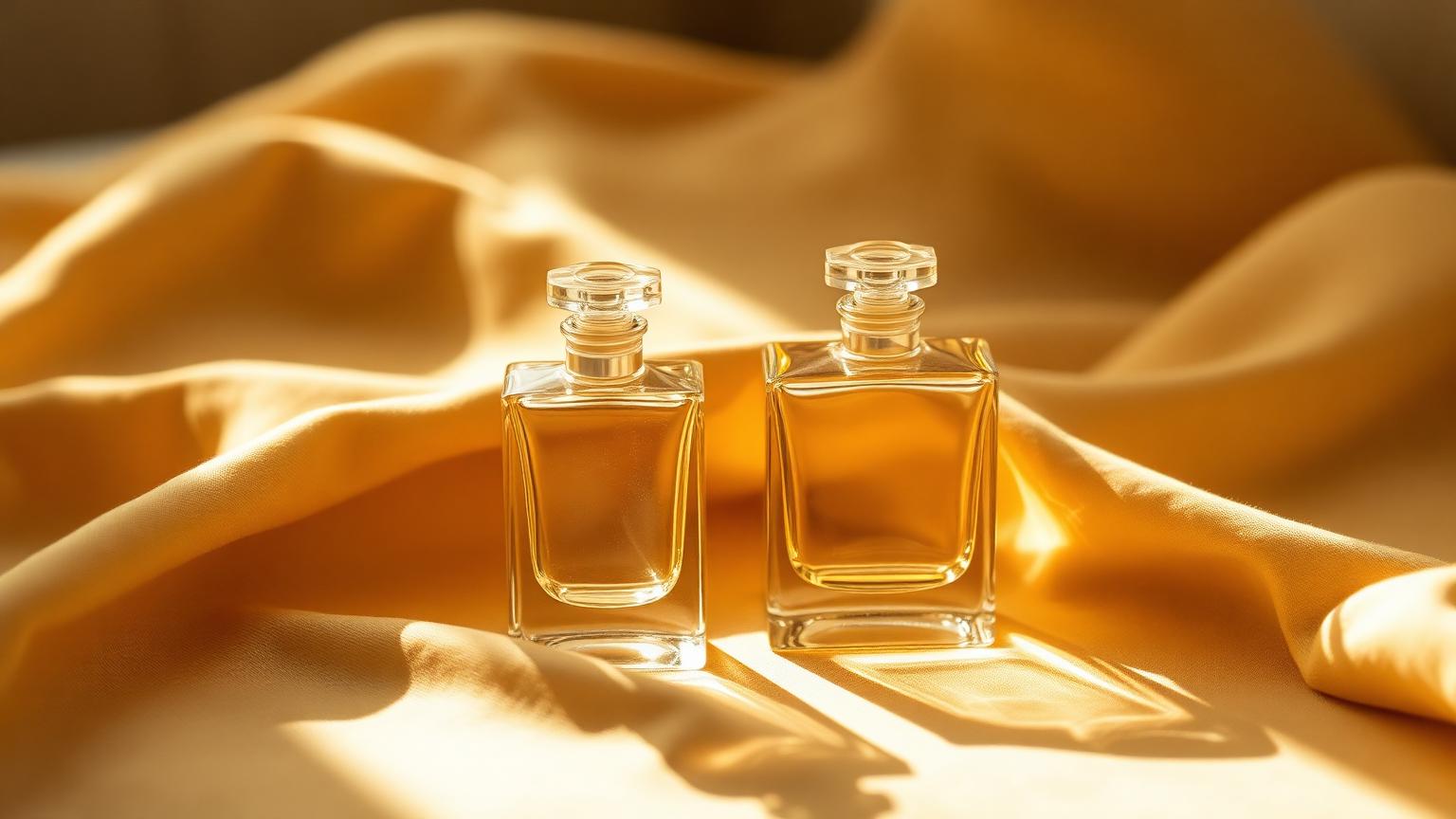
Layering — wearing two or more fragrances at once — is often presented as creative play. In practice, it is a discipline. Done well, it creates a composition no single bottle could produce, a private accord that becomes legibly yours. Done carelessly, it produces noise: two competent fragrances cancelling each other out, leaving the wearer smelling more anonymous than either one would have alone.
Most layering goes wrong for the same reason: the wearer assumes that two fragrances they enjoy separately will combine into something they enjoy more. They almost never do. Layering is not addition; it is composition, and composition is the work of restraint as much as it is the work of selection.
Stay within one family
The safest pairings share a fragrance family or a dominant note. A sandalwood EDP under an oud parfum will harmonise; a green floral under a smoky leather will fight. Think in terms of conversation, not contrast. The two scents should sound as though they belong to the same person, in the same room, on the same evening.
Pairings that work reliably: a soft musk under almost anything; a warm amber under a sweetened floral; an iris under a soft leather; a vetiver under a citrus EDT. Pairings that almost never work: aquatic under gourmand; green citrus under heavy oud; aldehyde-rich florals under animalic compositions. When unsure, smell the two on separate strips, hold them together a few inches from your nose, and trust what you find.
“Layering is not addition; it is composition. The discipline is restraint as much as selection.”
Let one fragrance lead
Always assign a lead and a support. The lead carries the identity; the support adds depth, warmth, or texture. Two fragrances of equal strength will compete and cancel, and the wearer ends up smelling of neither. A clearer rule than most layering writing offers: if you could not name, in one sentence, which of the two fragrances you wanted to read as primary, you are not yet ready to layer them.
A practical method: apply the deeper, longer-lasting scent — usually the EDP or parfum — to pulse points where heat amplifies it (neck, behind the ears, inner wrists). Apply the lighter scent to clothing or hair, where it diffuses more softly and lifts above the base. The deep fragrance becomes the body of the composition; the lighter one becomes its halo.
This same principle works for using a body product as a base. An unscented or lightly scented body oil under a parfum quietens projection and lengthens wear; a matching scented lotion under the same parfum amplifies the composition without changing its character. A different-family lotion under your perfume is almost always a mistake — the two will fight on the skin, and you will spend the day faintly bothered without quite knowing why.

Restrain the dose
Total volume matters more than the number of fragrances. Two light sprays of each, never the full daily dose of both. Layering rewards a lighter hand than a single-fragrance wear, because the combined sillage of two compositions is almost always greater than the sum of either one applied alone.
A good test: after applying both, walk into another room for a full minute. Return and breathe in. If the composition is still legible — if you can identify the lead and feel the support beneath it — the dose is right. If the room reads as one undifferentiated cloud, you applied too much of both. The fix is almost always to halve the support, not the lead.
When not to layer
A signature scent — the one that is meant to read as you — should almost never be layered. The whole point of a signature is that it is associated with you, recognisably and over time, and altering it with a second fragrance dilutes the association. Reserve layering for ordinary days, or for occasions when you wish to be slightly harder to place.
Layering is also wrong for formal settings where the room is small and the company is large. Two compositions in a closed dining room is too much for most wearers, no matter how disciplined the dose. Save the layering experiments for at-home wear, for travel, for occasions where the room can absorb the complexity and the wearer is not the only person being smelled.
A starting accord
If you have never layered intentionally, begin with the simplest reliable accord: a soft sandalwood or musk EDP applied to the skin, with a transparent citrus EDT applied to the shirt or scarf. The base warms and lengthens; the citrus lifts and brightens. The result is something close to a custom composition, and after a week of wearing it you will have learned more about how layering behaves than any amount of reading will teach you.
From that one accord, the rest of layering opens up — slowly, by experiment, one new pairing every few weeks. The discipline is not in trying many; it is in noticing which one is working, and returning to it.
Continue reading
Fragrance Through the Seasons