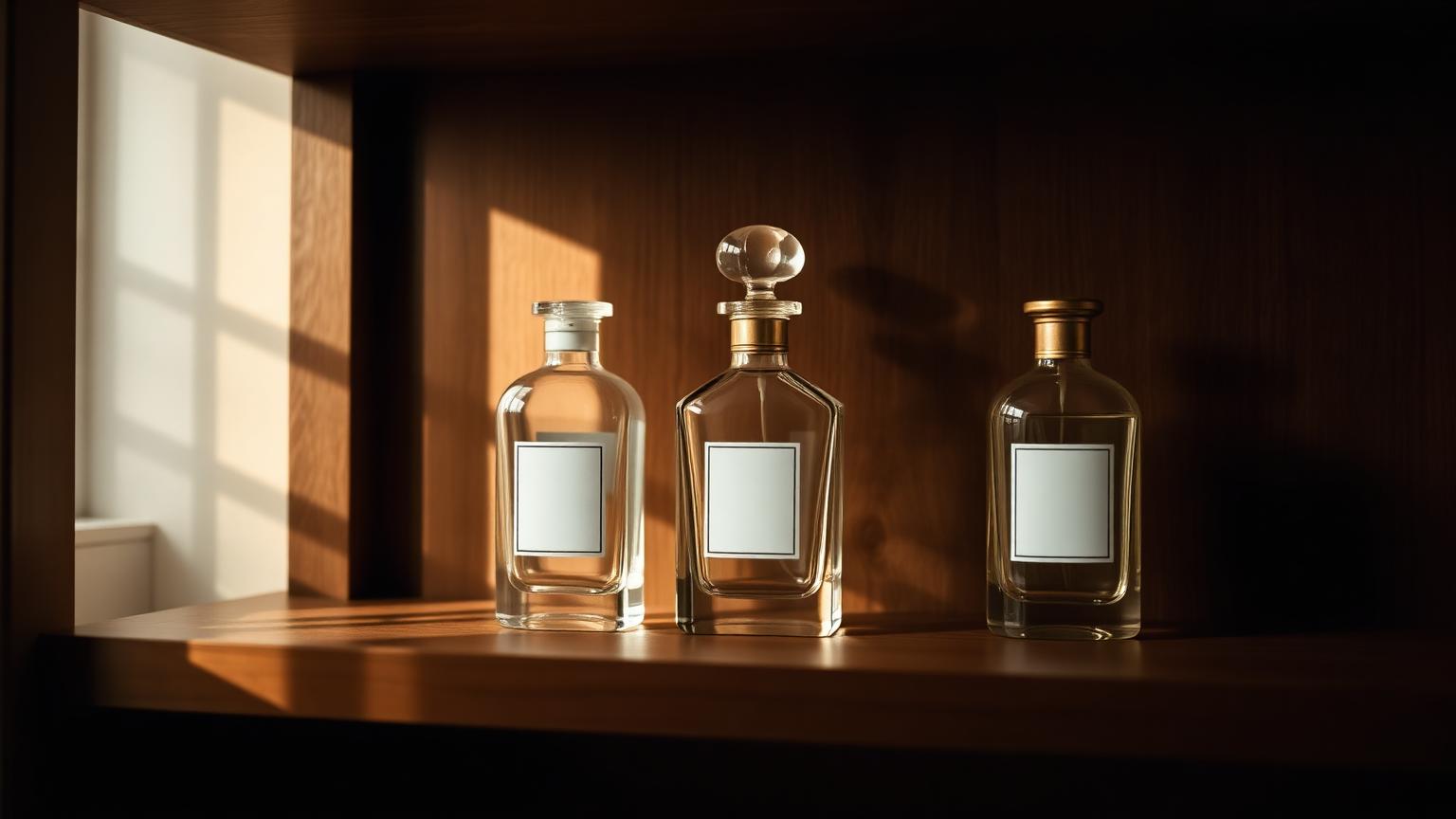
A fragrance wardrobe is not a collection. A collection is acquisitive — it grows because growth is its purpose, and the bottles inside it compete for shelf attention rather than for the wearer's. A wardrobe is curated. It grows only when an absence has been identified, and each piece in it has a role only it can perform.
The discipline is restraint. Begin with three. Most refined wardrobes never need more than five. The instinct to keep adding — a new launch, a friend's recommendation, a holiday discovery — is the instinct that produces a drawer full of half-finished bottles and no clear sense of what you actually wear. Resist it, and the wardrobe sharpens.
The signature
The first piece in the wardrobe is the fragrance you return to without thinking. The one that becomes you. It should feel polished, distinctive, and quietly memorable on the skin — present enough that others associate it with you, restrained enough that it never enters a room before you do.
A signature is rarely a recent launch and almost never a trend piece. It is something that, after a year of wearing, still feels like the right answer to the question of who you are. If you do not yet have one, the article on choosing a signature scent is the place to begin; if you do, the rest of the wardrobe arranges itself around it.
Wear the signature roughly four days of the week. Anything less and it stops reading as yours; anything more and it stops feeling like a choice. Four is the working figure for most refined wardrobes.
“A wardrobe grows only when an absence has been identified, and each piece in it has a role only it can perform.”
The daily
The second piece is a daily fragrance for the hours when you do not wish to be remembered for what you wore — only to feel finished. Lighter, softer, more discreet than your signature. Often an EDT rather than an EDP. Often a fragrance you could not honestly name as a favourite, but that you reach for two or three times a week without resistance.
Clean musks, transparent florals, soft woods, fine teas, and well-built citruses all fill this role. The daily is the wear for long working days, for travel, for the kind of social engagements where being noticed for your perfume would be a kind of overreach. It does not need to be remarkable; it needs to be reliable.
Cost matters less here than for the signature. A daily fragrance gets through bottles. Choose something whose price you can sustain without resentment, and whose composition you genuinely enjoy at conversational range. A daily you tire of within a season was not a daily — it was a misfile.
The evening
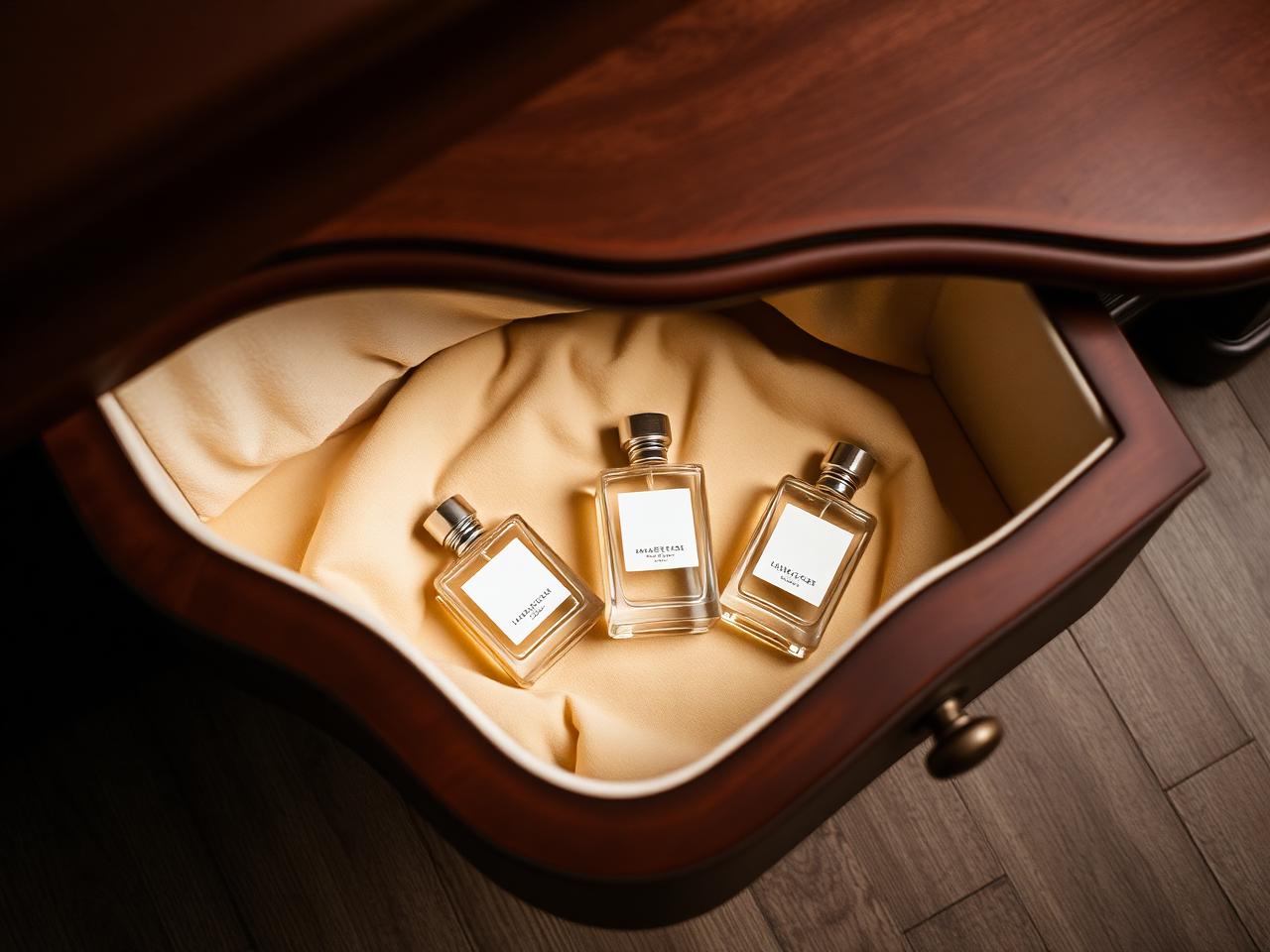
The third piece is for the hours that ask for more presence. Deeper, more resinous, more intimate. An evening fragrance is composed to do its best work in low light, at close range, on warm skin. Amber, leather, oud, smoke, vanilla absolute, sweetened florals — these are the materials that finally read as intended once the sun has gone.
Worn correctly, the evening piece is used rarely. Twice a month rather than twice a week. It is saved for occasions that justify the gesture: a dinner that matters, an event you have been looking forward to, a night you want to remember slightly differently from any other. Used more often, it loses its signal — the people closest to you stop associating it with anything in particular, and the fragrance becomes another daywear in a heavier dose.
A note on additions
If a fourth fragrance is added later, let it answer a real absence — a season, a mood, a ritual — rather than a curiosity. The two absences most wardrobes eventually identify are summer and travel. A bright, transparent summer fragrance for the months when the existing wardrobe feels too dense; a travel-friendly EDT in a 30ml that survives a carry-on and never disturbs a seatmate. Both are honest additions.
What does not justify a fourth bottle is novelty. A launch that intrigues you on a sample is not a wardrobe piece — it is a sample. Wear it as a decant for a month, see whether the interest holds, and only then consider buying a bottle. The wardrobe is improved by patience far more than by enthusiasm.
Editing the wardrobe
Once a year — at the end of summer is a good moment — look at the bottles on the shelf and ask which ones you actually wore. The ones you reached for stay. The ones you did not, regardless of cost or sentiment, are not part of the wardrobe. They are part of a collection.
Move them to a separate shelf, or pass them along to someone who will wear them. A wardrobe of four worn fragrances is far more refined than a wardrobe of fifteen, half of which sit untouched. The discipline of the edit is the discipline of the wardrobe itself: every piece is doing something, or it does not belong.
Continue reading
Notes That Create a Refined and Memorable Presence