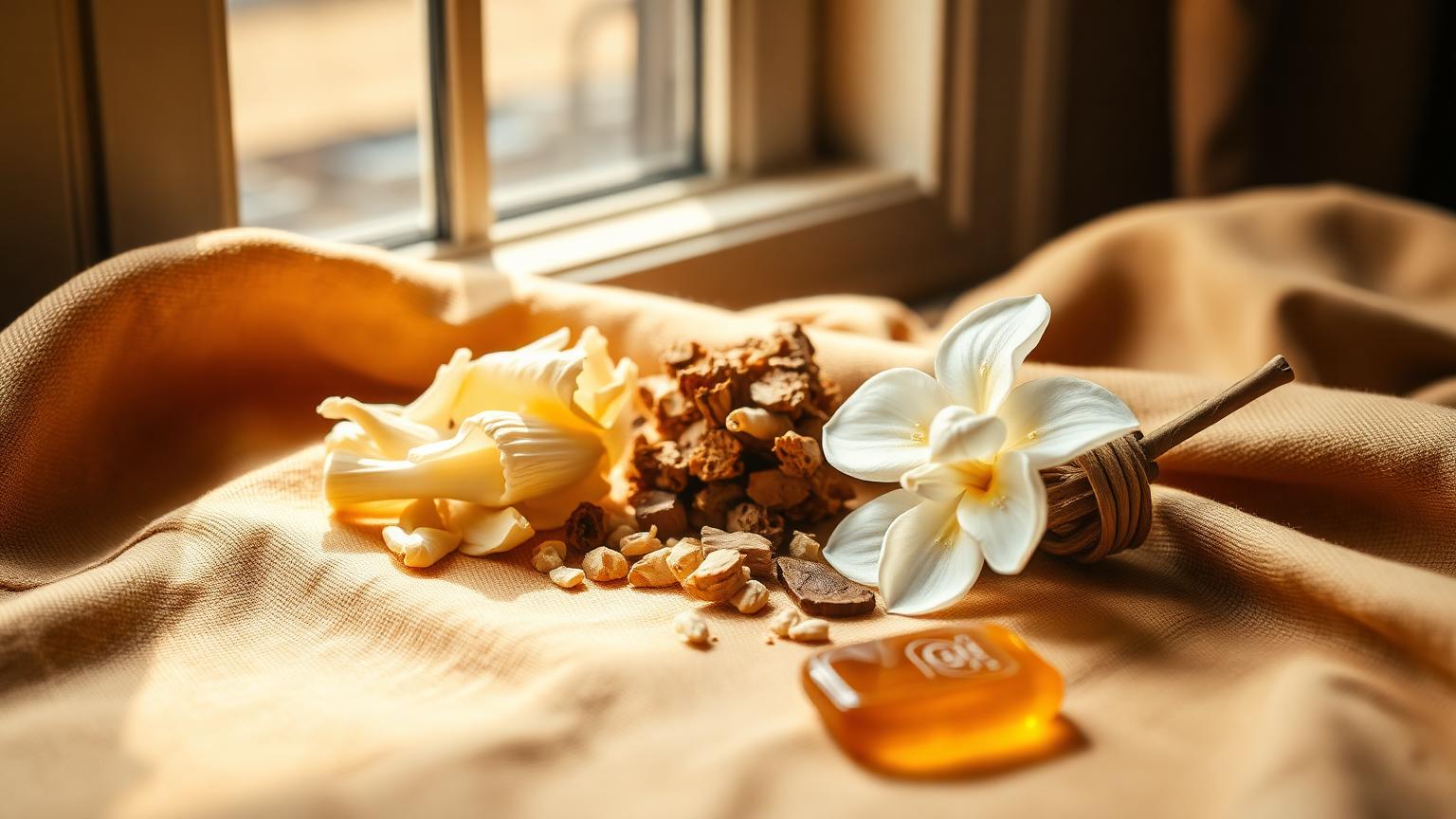
Some notes simply read as expensive. Not always because of their cost — though many of them are costly — but because of what they ask of the wearer, and what they leave behind in a room. They take longer to bloom on the skin, demand restraint in dosing, and reward the patience of a wearer willing to live with them past the first hour.
The list that follows is not exhaustive. It is a short atlas of materials that, when handled well, lift a composition from pleasing to refined. Learning to recognise them in the dry-down of a fragrance is one of the few skills in perfumery that pays dividends for the rest of a wardrobe-building life.
Iris
Powdery, cool, faintly earthy, with a quiet vegetal sweetness that resists description. True iris — orris butter, extracted from rhizomes aged three to six years before processing — is one of the most expensive raw materials in perfumery. It is also one of the most aristocratic. A composition built around iris signals restraint and refinement in any composition it enters.
Iris reads as cold when it first appears, then warms slowly into something softer, suede-like, faintly carrot-skin. In houses that use it generously — think Italian and French niche, certain Japanese minimalists — it can carry a perfume on its own for hours. In compositions that use it more sparingly, it lends a powdery elegance that flatters white florals and soft woods alike.
“Iris reads as cold when it first appears, then warms slowly into something suede-like and quietly aristocratic.”
Ambergris
Salt, warmth, and skin. Real ambergris — the rare oxidised secretion of sperm whales — is now too scarce and too restricted for mainstream use, and modern perfumery overwhelmingly uses refined synthetic accords (ambroxan, ambrox, ambrocenide). The impression, however, is the same: a softening glow that makes a fragrance feel intimately yours, as though it has been on the skin much longer than it has.
Ambergris is not a fragrance you smell so much as a frame the other notes sit inside. In a good amber composition you will notice the warmth and the slight marine salinity without being able to point at any particular note responsible. That softness is the work of ambergris, doing what only ambergris does — closing the gap between the perfume and the wearer until they read as one.
Oud
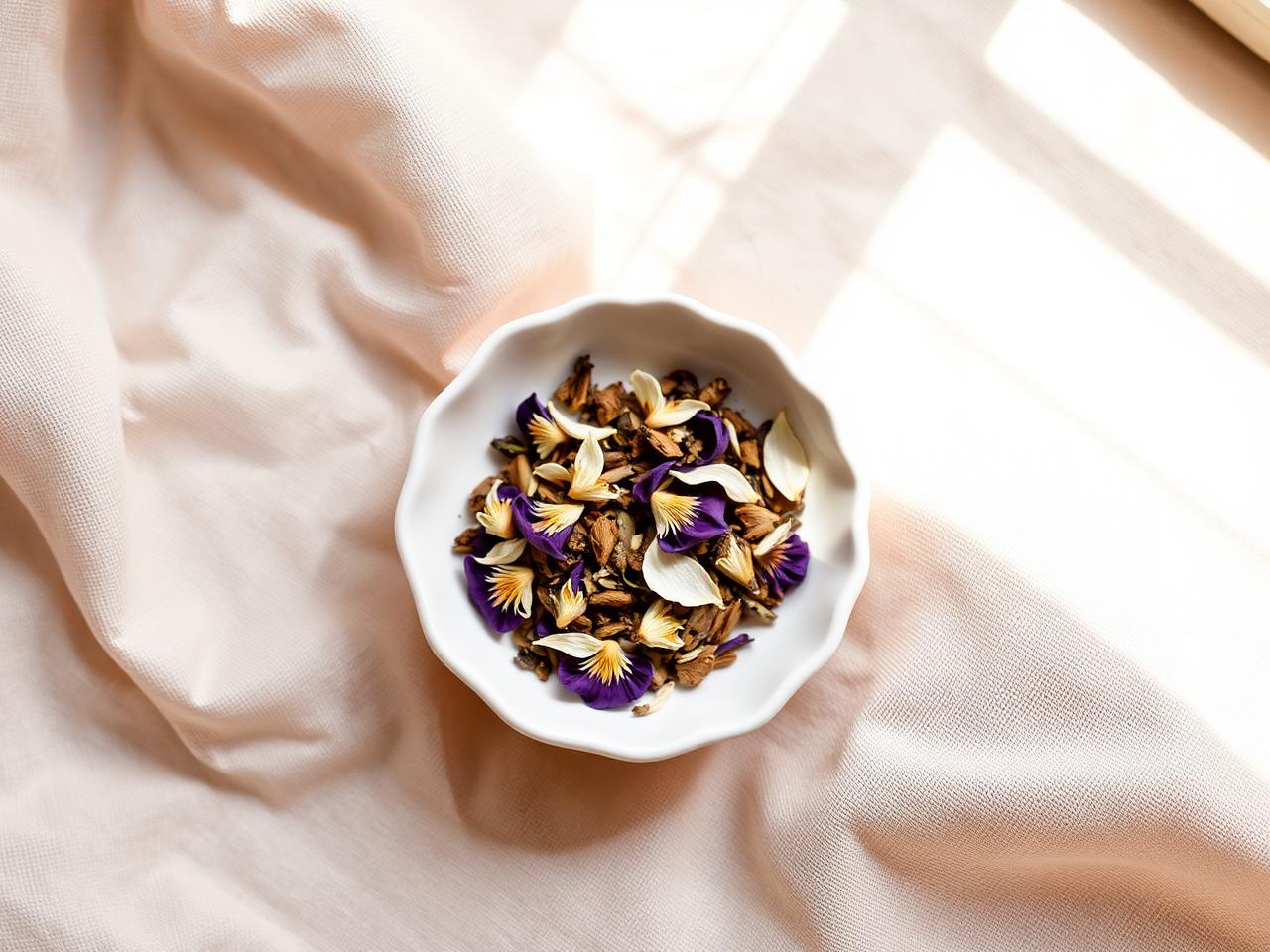
Resinous, animalic, ancient. Real oud — the infected heartwood of the Aquilaria tree — is one of the most prized materials in the world, and one of the most divisive. Used with restraint, it lends presence without volume, a kind of weighted intimacy that no other note can produce. Used without restraint, it overwhelms a room and the wearer with it.
The mark of a refined oud composition is that it does not announce itself as oud. The note is dosed quietly, often supported by rose, saffron, sandalwood, or leather, so that what reads in the dry-down is depth rather than smoke. The best oud fragrances feel almost reticent — a quality that is hard to fake, because the temptation with so prestigious a material is always to use too much.
Sandalwood
Creamy, soft, milky, lasting. Sandalwood is the most flattering wood in perfumery — a base note that warms and lengthens almost any composition that contains it, and that few skins reject. True Mysore sandalwood is now largely depleted and protected, and modern compositions use Australian sandalwood (Santalum spicatum) or refined synthetic accords; the best of these come remarkably close to the original.
Sandalwood's gift is its gentleness. It lends body without weight, warmth without heat, longevity without insistence. A composition with a real sandalwood base will often outlast its top notes by hours and feel softer at hour eight than at hour two. In a daywear it adds quiet polish; in an evening fragrance it adds the kind of skin-warmth that good company recognises.
Jasmine sambac
Indolic, narcotic, alive. Where jasmine grandiflorum is bright and floral, sambac carries a depth and sensuality that reads as grown-up, considered, and quietly seductive. The note is harvested at night, when its volatile aromatic compounds peak, which is part of why a good sambac absolute can cost as much per kilo as some industrial machinery.
Sambac shines in compositions where it is allowed to be slightly improper. The faint animalic edge — the indoles — is what gives it character; perfumes that scrub it out leave only a generic white floral behind. Wearers who find traditional jasmine too sweet often find sambac suits them perfectly, because what reads in sambac is less the flower than the warm night air the flower was picked in.
Reading a fragrance for these notes
These materials almost never appear in the opening of a fragrance. The opening belongs to volatile, attention-grabbing notes — citrus, aldehydes, green leaves, lighter florals — that catch the nose in the first ten minutes and then evaporate. The expensive materials sit underneath, becoming audible only after the top notes have left.
This is why wearing a fragrance for several hours before judging it matters so much. The dry-down — three to six hours in — is where iris, oud, sandalwood, ambergris, and sambac finally settle and reveal themselves. It is also where memorable presence is built. A fragrance that smells beautiful at the moment of application but bland at hour six is one without these materials, or with them in homeopathic doses. A fragrance that smells better at hour six than at hour one is almost always built around them, and is almost always worth living with.
Continue reading
The Concentrations: Parfum, EDP, EDT, Cologne