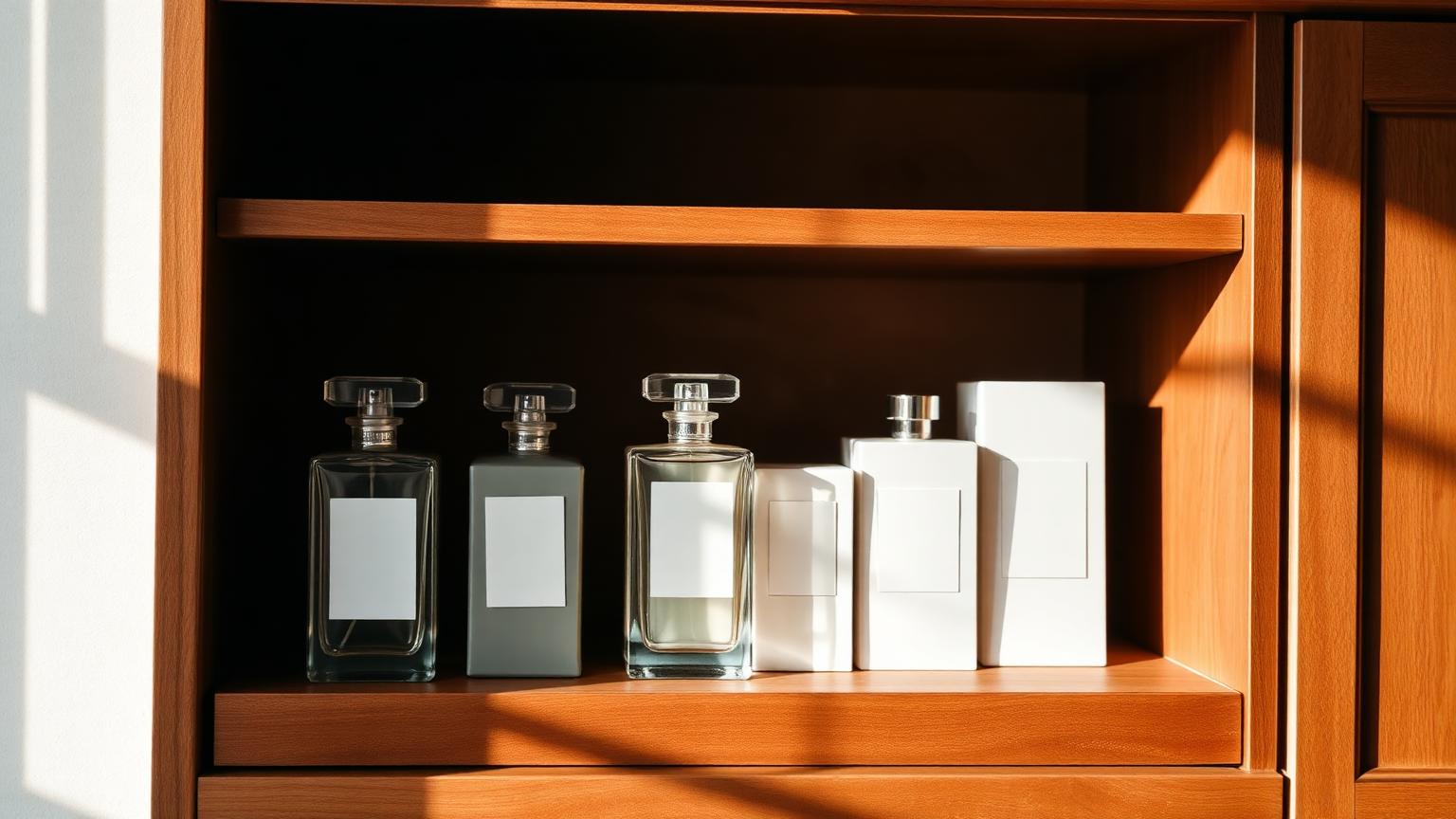
A well-made fragrance, properly stored, will smell as intended five years from the day it was bottled. Mistreated, the same bottle can turn within a single summer — top notes flattened, colour darkened, base notes gone slightly sour. The economics are unforgiving: a 100ml parfum that cost what a piece of fine jewellery would cost can lose half its value to a sunny bathroom shelf in eight weeks.
There are three enemies of fragrance storage, and only three. Light, heat, and air. Every error in storing perfume traces back to one of them, and every discipline of correct storage is a response to one of them. The good news is that the disciplines are small, easy, and once installed do not require any further attention.
Light
Ultraviolet light breaks down the aromatic molecules that make a fragrance smell the way it does. A bottle on a sunlit shelf or vanity is being slowly bleached, both visually and olfactorily. Colour change in the liquid is the first warning sign — a pale champagne turning amber, an amber turning brown — and is usually visible long before the smell on the skin follows.
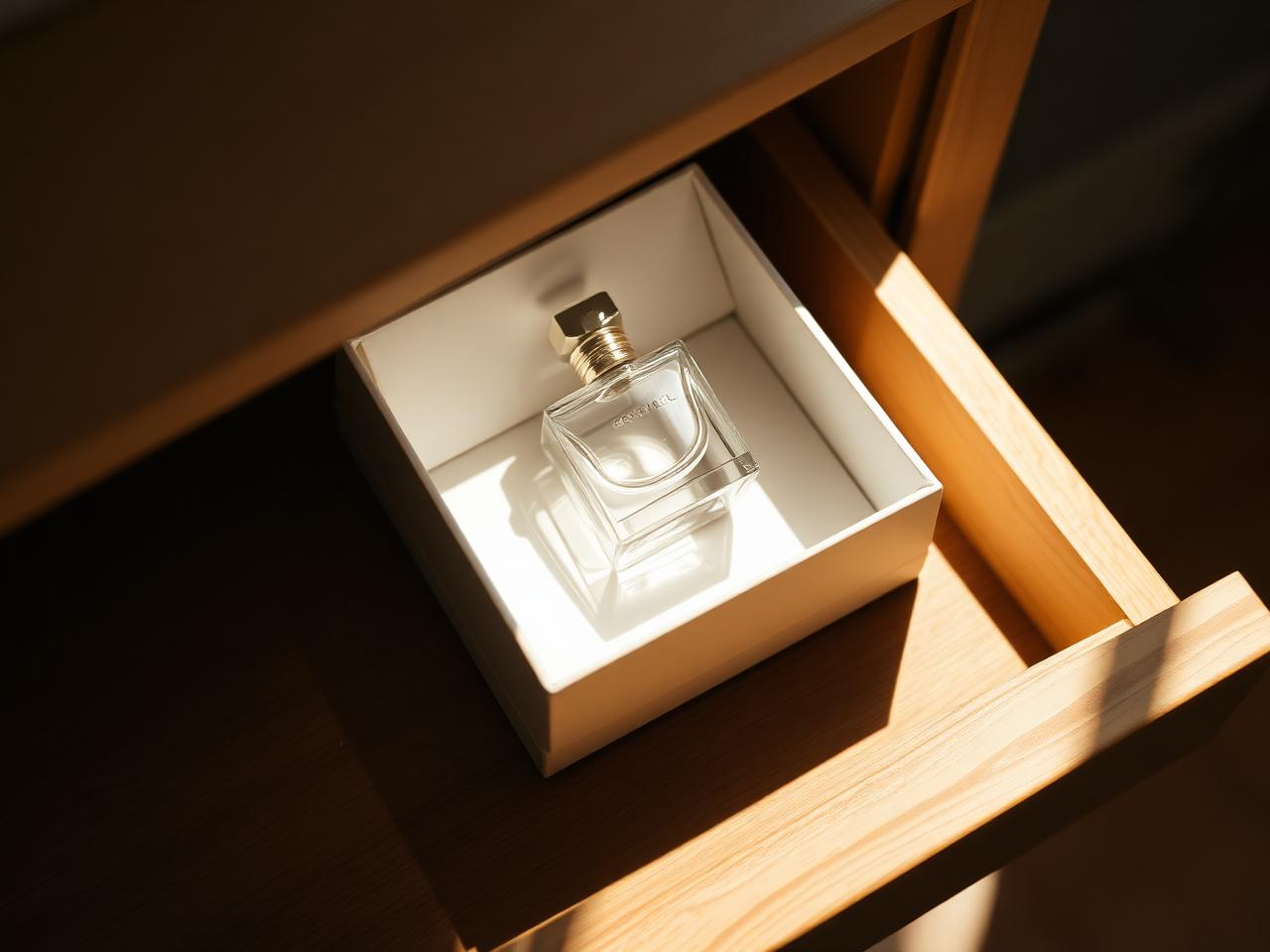
The fix is straightforward. Keep fragrances in their boxes when not in use, or store them in a closed drawer or cabinet. The pretty arrangement of bottles on a sunny bedroom windowsill is the worst possible storage in the home, no matter how well it photographs. If display matters to you, choose one or two bottles to display in a corner of the room that never catches direct sun, and keep the rest of the wardrobe in their boxes elsewhere.
“The pretty arrangement of bottles on a sunny windowsill is the worst possible storage in the home.”
Heat
Heat accelerates oxidation. Every ten-degree rise in storage temperature roughly doubles the rate at which a fragrance ages — which is why bathrooms, humid and warm and frequently both at once, are the worst possible room in the home for storing perfume. They are also, by long convention, where most people keep their fragrances.
A cool bedroom drawer is far better. A north-facing closet shelf is better still. A wine fridge, set to fragrance-appropriate temperatures (12 to 15°C), is the right answer for a serious collection — and for parfum or vintage bottles, it is genuinely transformative. Even a basic small wine fridge for ten or fifteen bottles will preserve a serious wardrobe far longer than any conventional storage will.
The other heat trap is travel. A bottle left in a hot car for an afternoon, or in a checked suitcase across a hot tarmac, can age more in two hours than it would in a year of correct storage. Decant travel bottles into small atomisers and leave the originals at home.
Air
Every spray replaces a little liquid in the bottle with a little air, and oxygen slowly alters the composition. There is no avoiding this — it is the price of using the bottle — but a few disciplines slow it considerably. A tightly closed cap matters more than people realise; a loose stopper or a worn atomiser thread can double the rate of oxidation. An upright bottle minimises the surface area of liquid exposed to the air pocket above it.
For wearers who travel with their fragrance or want to extend the life of a treasured bottle, decanting into smaller atomisers is the most effective single discipline. A 5ml or 10ml decant for daily use means the original 100ml bottle stays sealed, full, and slowly aging at a fraction of the rate it otherwise would. The decant ages faster — but it is the decant you are happy to use up.
A simple practice
Box, drawer, upright, capped. Four small disciplines that preserve the work of the perfumer and the money you spent on it. None of them require effort beyond the first day; once installed, they look after themselves.
Once a year, take everything out and look at the bottles. Compare the colour of each to its original (the original box often has a printed image you can use as a reference). Smell each on a fresh blotter, not on skin, to test the opening notes without your own scent interfering. A bottle that smells unmistakably duller than you remember, or that has shifted noticeably darker in colour, is past its prime — and if it is past its prime in spite of correct storage, the bottle was already old when you bought it.
Refined fragrance ownership is largely the work of these small, quiet habits. The discipline is not in the buying; it is in keeping what you have bought worth wearing.
Continue reading
Fragrance as a Considered Gift